Linux
Understanding the Linux Operating System
The **Linux operating system** is a cornerstone of modern computing, renowned for its stability, security, and open-source nature. This powerful **UNIX-like system** isn’t a single entity but a family of diverse **Linux distributions**, each offering unique features. From desktop environments to robust **Linux servers**, its versatility is unmatched. Mastering **Linux commands** is fundamental for deep system control. As a leading example of **open source software**, Linux fosters innovation and community collaboration, making it an ideal platform for developers and enthusiasts. Explore our **Linux tutorial** to get started!Linux is a Unix-like operating system kernel, originally developed by Linus Torvalds and first released in 1991. It is the core component of a vast family of operating systems, commonly known as Linux distributions (e.g., Ubuntu, Fedora, Debian, Arch Linux), which combine the kernel with GNU system utilities, libraries, and other software. Its design emphasizes modularity, stability, and security, making it highly adaptable for a wide range of hardware and applications, from embedded devices and smartphones to supercomputers and cloud servers.
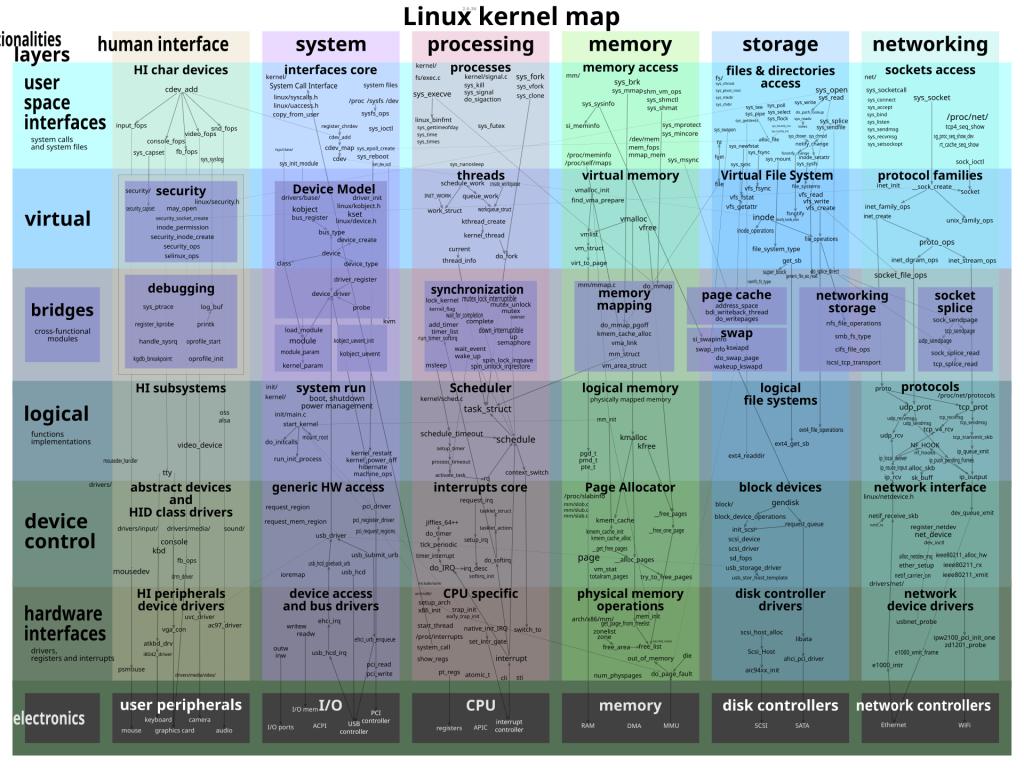
The core philosophy behind Linux is open-source development, fostering a global community of developers who continuously contribute to its evolution. Architecturally, it is a monolithic kernel, meaning the entire operating system runs in kernel space, providing high performance and direct access to hardware. However, it supports loadable kernel modules, allowing for dynamic extension of functionality without recompiling the entire kernel. This flexibility, combined with its robust multitasking, multi-user capabilities, and extensive hardware support, has cemented its position as a dominant force in server, embedded, and increasingly, desktop computing environments. The user experience varies greatly depending on the chosen Linux distribution and desktop environment (e.g., GNOME, KDE Plasma, XFCE), offering unparalleled customization and control.
 Linux Kernel (as foundation for Linux distributions)
📌 Overview & Description
Linux is a Unix-like operating system kernel, originally developed by Linus Torvalds and first released in 1991. It is the core component of a vast family of operating systems, commonly known as Linux distributions (e.g., Ubuntu, Fedora, Debian, Arch Linux), which combine the kernel with GNU system utilities, libraries, and other software. Its design emphasizes modularity, stability, and security, making it highly adaptable for a wide range of hardware and applications, from embedded devices and smartphones to supercomputers and cloud servers.
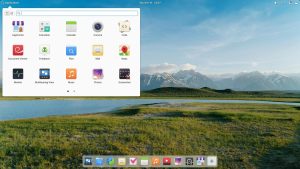
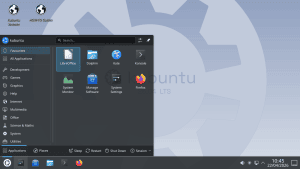
The core philosophy behind Linux is open-source development, fostering a global community of developers who continuously contribute to its evolution. Architecturally, it is a monolithic kernel, meaning the entire operating system runs in kernel space, providing high performance and direct access to hardware. However, it supports loadable kernel modules, allowing for dynamic extension of functionality without recompiling the entire kernel. This flexibility, combined with its robust multitasking, multi-user capabilities, and extensive hardware support, has cemented its position as a dominant force in server, embedded, and increasingly, desktop computing environments. The user experience varies greatly depending on the chosen Linux distribution and desktop environment (e.g., GNOME, KDE Plasma, XFCE), offering unparalleled customization and control.
⚙️ Technical Specifications & Release Timeline
💻 System Requirements (Minimum vs Recommended)
| Hardware Component | Minimum Requirements | Recommended Requirements |
|---|---|---|
|
Processor (CPU)
|
32-bit or 64-bit compatible CPU (e.g., Intel Pentium 4 or equivalent for basic CLI; ARM Cortex-A5) | Dual-core 64-bit CPU (e.g., Intel Core i3 or AMD Ryzen 3 equivalent or better) |
|
Memory (RAM)
|
256 MB (for basic CLI); 1 GB (for lightweight desktop environments) | 8 GB |
|
Storage Space
|
5 GB (for basic CLI); 20 GB (for lightweight desktop environments) | 120 GB SSD |
|
Graphics Card (GPU)
|
VGA compatible graphics card with 800x600 resolution | Modern GPU with hardware acceleration (e.g., Intel HD Graphics 600 series, AMD Radeon RX 500 series, NVIDIA GeForce GTX 10 series or newer) with 1920x1080 resolution |
✅ What is Supported
- Extensive hardware support for a vast array of devices
- Robust networking capabilities and protocols
- Multiple desktop environments (GNOME, KDE Plasma, XFCE, etc.)
- Thousands of open-source and proprietary applications
- Virtualization technologies (KVM, Docker, LXC)
- Command-line interface (CLI) and graphical user interface (GUI) options
- Multi-user and multitasking capabilities
🚀 Best Supported For (Ideal Use Cases)
- Servers and cloud infrastructure
- Embedded systems and IoT devices
- Supercomputing and high-performance computing (HPC)
- Software development and programming environments
- Customizable desktop workstations for power users
- Educational and research environments
- Security-focused applications and penetration testing
🌟 Key Features & Advantages
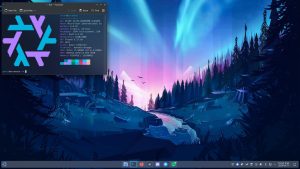
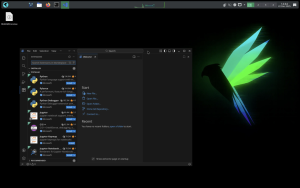
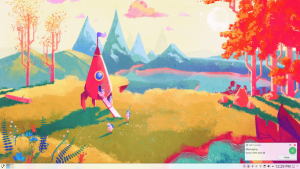
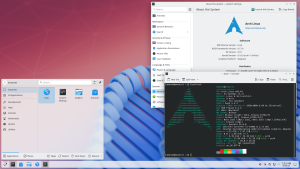
OS Screenshots