Arch Linux
Arch Linux is an independently developed, x86-64 optimized Linux distribution that adheres to the “KISS” principle (Keep It Simple, Stupid). Founded by Judd Vinet in 2002, its core philosophy emphasizes user control, transparency, and a minimalist base system. Unlike many other distributions, Arch Linux does not provide a default desktop environment or a graphical installer; users build their system from the ground up, installing only the components they need.
Arch Linux employs a rolling release model, meaning there are no distinct “versions” in the traditional sense. Instead, the system is continuously updated with the latest software packages, providing users with bleeding-edge software. Its package manager, Pacman, is known for its speed and efficiency, while the Arch User Repository (AUR) extends the available software significantly. This design makes Arch Linux highly customizable and suitable for users who prefer a hands-on approach and a deep understanding of their operating system.
 Arch Linux
📌 Overview & Description
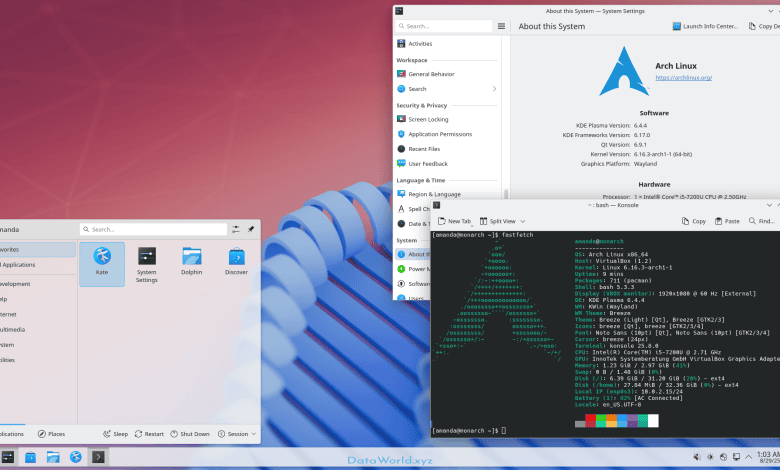
Arch Linux is an independently developed, x86-64 optimized Linux distribution that adheres to the "KISS" principle (Keep It Simple, Stupid). Founded by Judd Vinet in 2002, its core philosophy emphasizes user control, transparency, and a minimalist base system. Unlike many other distributions, Arch Linux does not provide a default desktop environment or a graphical installer; users build their system from the ground up, installing only the components they need.
Arch Linux employs a rolling release model, meaning there are no distinct "versions" in the traditional sense. Instead, the system is continuously updated with the latest software packages, providing users with bleeding-edge software. Its package manager, Pacman, is known for its speed and efficiency, while the Arch User Repository (AUR) extends the available software significantly. This design makes Arch Linux highly customizable and suitable for users who prefer a hands-on approach and a deep understanding of their operating system.
⚙️ Technical Specifications & Release Timeline
💻 System Requirements (Minimum vs Recommended)
| Hardware Component | Minimum Requirements | Recommended Requirements |
|---|---|---|
|
Processor (CPU)
|
64-bit processor (x86_64) | Modern multi-core 64-bit processor |
|
Memory (RAM)
|
512 MB | 8 GB or more |
|
Storage Space
|
2 GB | 20 GB+ SSD |
|
Graphics Card (GPU)
|
Basic graphics card or integrated graphics for console output | Modern GPU with open-source or proprietary drivers for desktop environments |
✅ What is Supported
- Wide range of desktop environments (GNOME, KDE Plasma, Xfce, etc.)
- Extensive software repositories (official and AUR)
- Multiple kernel versions (linux, linux-lts, linux-zen)
- Various file systems (ext4, Btrfs, XFS, ZFS, etc.)
- Modern hardware support
- Virtualization technologies (KVM, VirtualBox, Docker)
- Systemd init system
- Wayland and Xorg display servers
🚀 Best Supported For (Ideal Use Cases)
- Advanced users and developers
- Users who prefer a "do-it-yourself" approach
- Customizable desktop and server environments
- Bleeding-edge software and kernel versions
- Minimalist installations
- Learning Linux internals
- Performance-critical applications (due to minimal bloat)
- Rolling release model for always up-to-date software
🌟 Key Features & Advantages
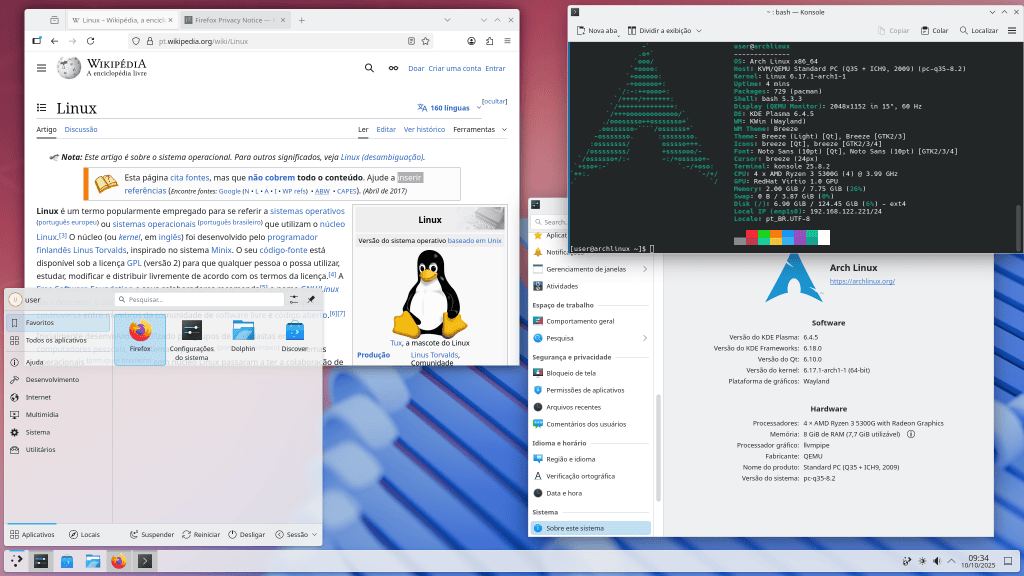
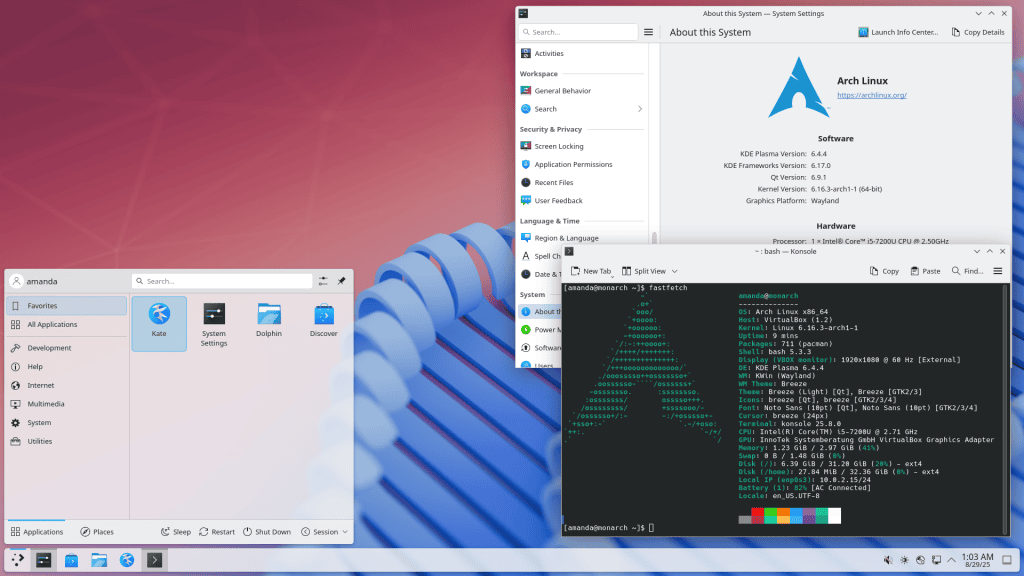
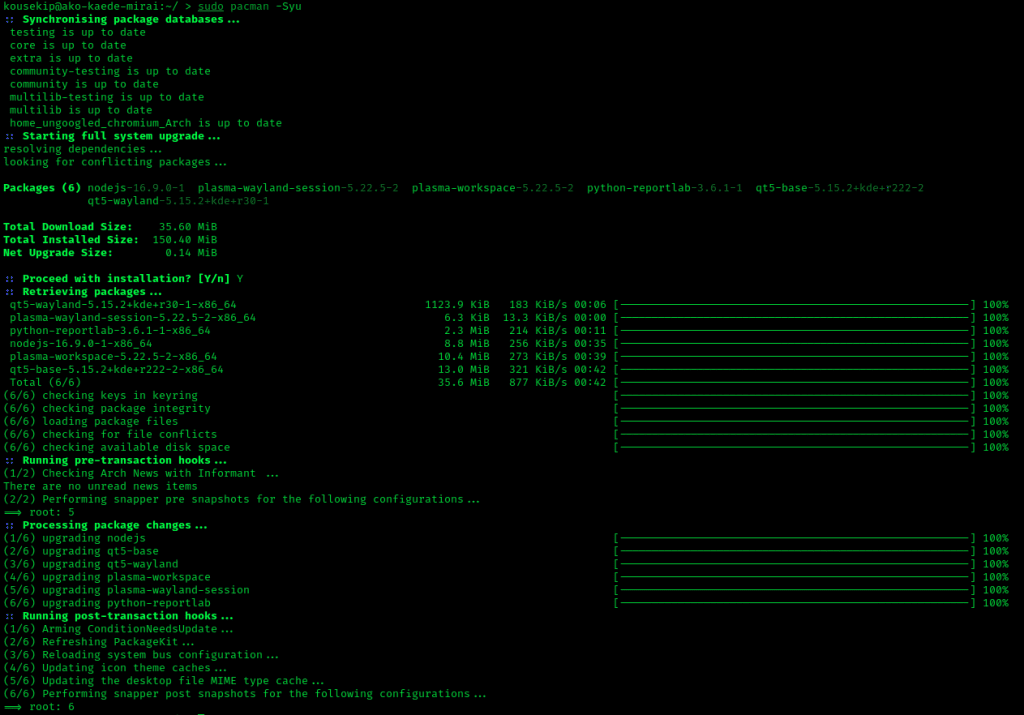
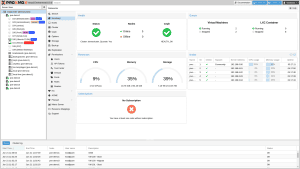
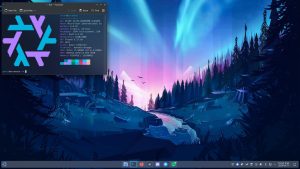
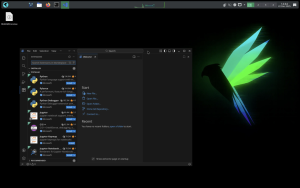
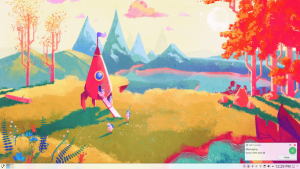
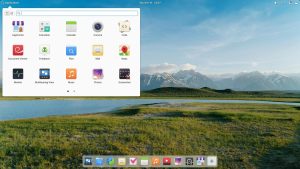
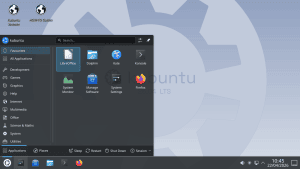
OS Screenshots