NixOS
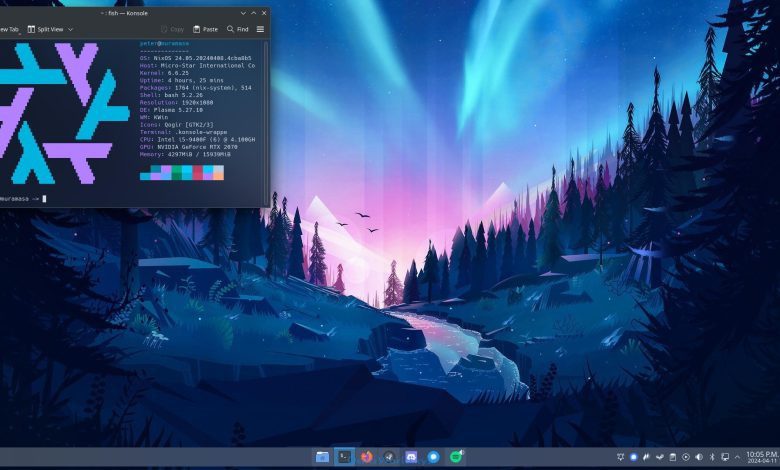
NixOS is an innovative Linux distribution built on top of the Nix package manager. Its core philosophy revolves around a purely functional deployment model, where the entire system configuration, including the kernel, applications, system services, and configuration files, is described in a declarative language (Nix expressions). This approach ensures that a NixOS system is entirely reproducible, meaning that rebuilding the system from the same configuration will always yield an identical result, regardless of the underlying environment or previous states. This declarative nature simplifies system administration, makes upgrades and rollbacks atomic and reliable, and facilitates consistent development and deployment environments.
Unlike traditional Linux distributions where packages are installed into global directories and configurations are scattered, NixOS builds everything into the Nix store with unique cryptographic hashes. This isolation prevents dependency conflicts (“dependency hell”) and allows multiple versions of the same software to coexist. Users define their desired system state in a single configuration file (`/etc/nixos/configuration.nix`), which NixOS then builds and activates. This robust, atomic update mechanism means that if a new configuration fails, rolling back to a previous working state is a trivial and instantaneous operation, significantly enhancing system stability and reliability. Its unique architecture makes it particularly appealing for developers, system administrators, and anyone seeking a highly controlled, reproducible, and robust operating system.
 NixOS
📌 Overview & Description
NixOS is an innovative Linux distribution built on top of the Nix package manager. Its core philosophy revolves around a purely functional deployment model, where the entire system configuration, including the kernel, applications, system services, and configuration files, is described in a declarative language (Nix expressions). This approach ensures that a NixOS system is entirely reproducible, meaning that rebuilding the system from the same configuration will always yield an identical result, regardless of the underlying environment or previous states. This declarative nature simplifies system administration, makes upgrades and rollbacks atomic and reliable, and facilitates consistent development and deployment environments.
Unlike traditional Linux distributions where packages are installed into global directories and configurations are scattered, NixOS builds everything into the Nix store with unique cryptographic hashes. This isolation prevents dependency conflicts ("dependency hell") and allows multiple versions of the same software to coexist. Users define their desired system state in a single configuration file (`/etc/nixos/configuration.nix`), which NixOS then builds and activates. This robust, atomic update mechanism means that if a new configuration fails, rolling back to a previous working state is a trivial and instantaneous operation, significantly enhancing system stability and reliability. Its unique architecture makes it particularly appealing for developers, system administrators, and anyone seeking a highly controlled, reproducible, and robust operating system.
⚙️ Technical Specifications & Release Timeline
💻 System Requirements (Minimum vs Recommended)
| Hardware Component | Minimum Requirements | Recommended Requirements |
|---|---|---|
|
Processor (CPU)
|
64-bit x86 processor (e.g., Intel Core 2 Duo or equivalent AMD) | Multi-core 64-bit processor (e.g., Intel Core i5/i7/i9 or AMD Ryzen 5/7/9) |
|
Memory (RAM)
|
2 GB (for graphical environment, CLI might run on less) | 8 GB or more |
|
Storage Space
|
32 GB (for basic system with some generations) | 128 GB SSD or larger |
|
Graphics Card (GPU)
|
Any graphics card with basic VESA support; 1024x768 display | Modern integrated GPU (e.g., Intel Iris Xe, AMD Radeon Graphics) or dedicated GPU (e.g., NVIDIA GeForce, AMD Radeon) with 1920x1080 display or higher |
✅ What is Supported
- Declarative system configuration for entire OS
- Atomic upgrades and rollbacks
- Reproducible build environments
- Coexistence of multiple software versions
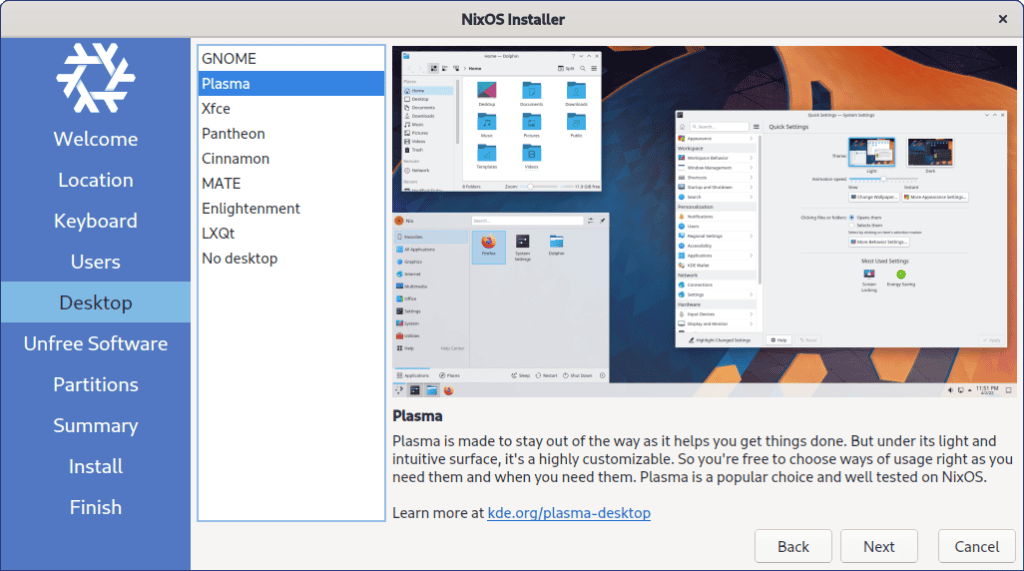
- Wide range of desktop environments (GNOME, KDE Plasma, XFCE, etc.)
- Extensive package repository (Nixpkgs)
- Containerization and virtual machine integration (NixOps, Nix-on-Droid)
- Support for various hardware architectures
🚀 Best Supported For (Ideal Use Cases)
- Developers seeking reproducible development environments
- System administrators managing complex server infrastructures
- Users prioritizing system stability and atomic updates
- DevOps teams requiring consistent deployment across environments
- Anyone interested in functional programming principles applied to OS management
- Researchers needing to reproduce computational experiments
- Users who value fine-grained control over their system configuration
- Organizations building immutable infrastructure
🌟 Key Features & Advantages
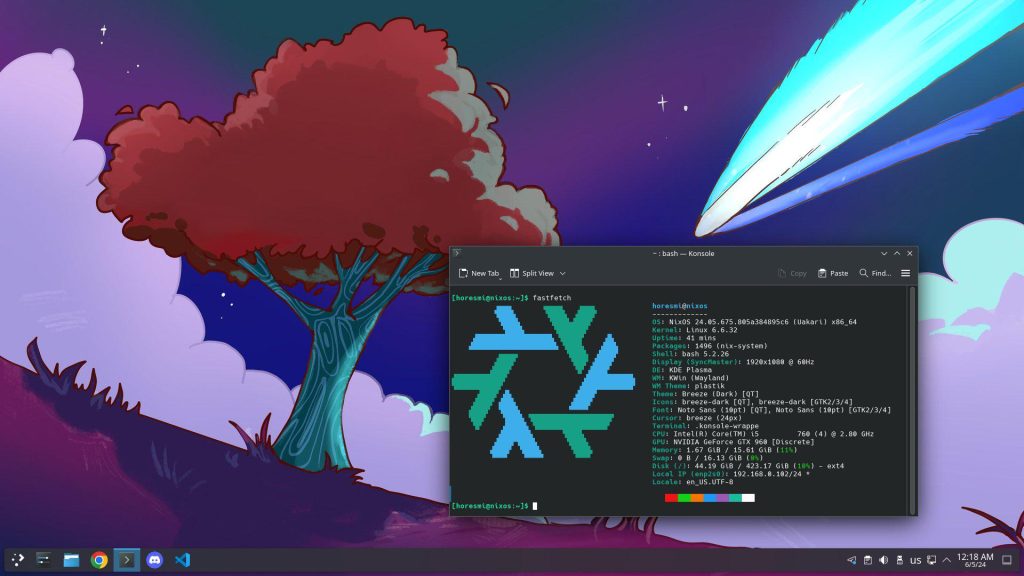
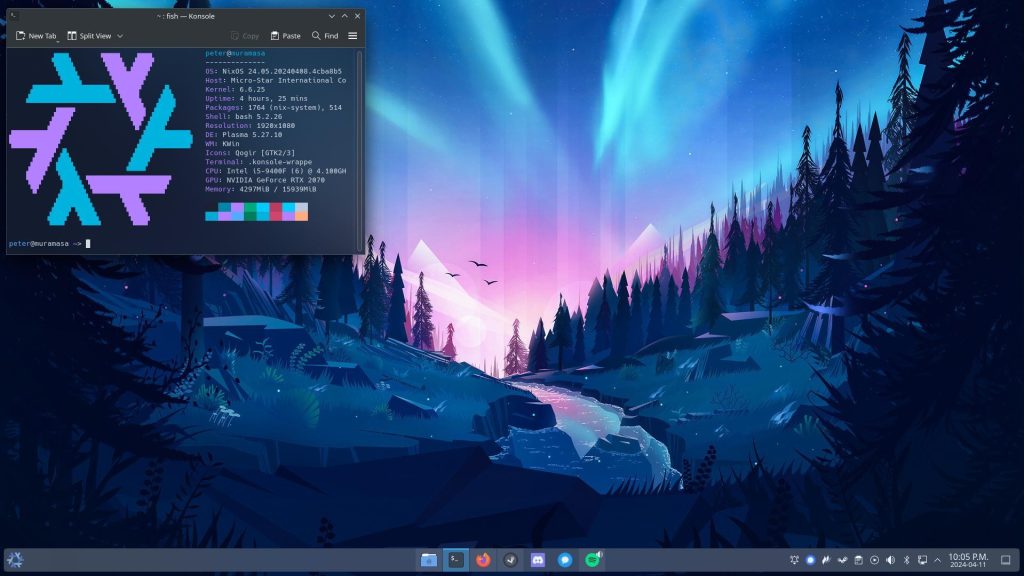
OS Screenshots