Kubuntu
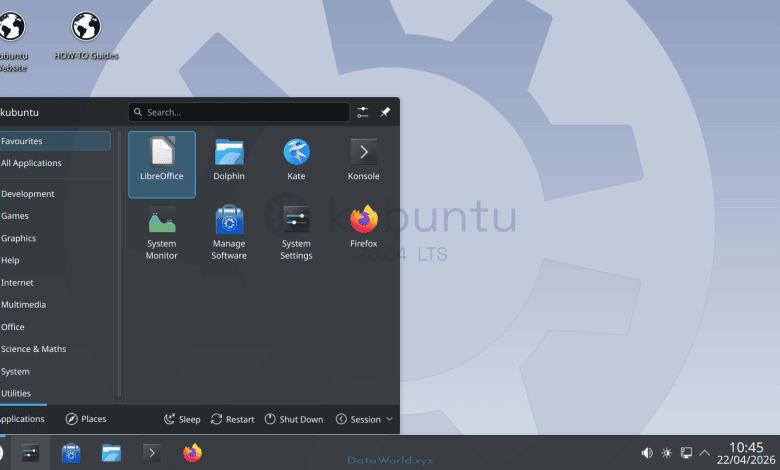
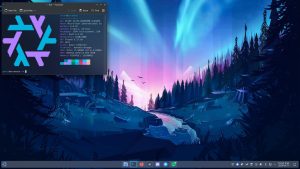
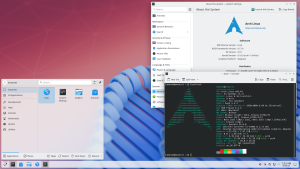
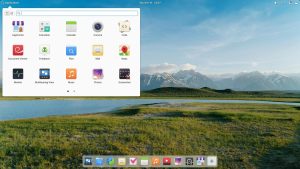
Kubuntu is an official derivative of the Ubuntu operating system, distinguished by its use of the KDE Plasma Desktop environment instead of Ubuntu’s default GNOME. It aims to provide a user-friendly, visually appealing, and highly customizable computing experience, leveraging the extensive features and applications offered by the KDE ecosystem. As an Ubuntu flavor, Kubuntu inherits the robust Debian base, the efficient APT package management system, and access to Ubuntu’s vast software repositories, ensuring stability, security, and a wide array of available applications.
First released in April 2005 alongside Ubuntu 5.04 ‘Hoary Hedgehog’, Kubuntu follows Ubuntu’s predictable release cycle, with new versions typically arriving every six months (April and October). Long Term Support (LTS) versions are released every two years, offering five years of security and maintenance updates, making them ideal for users seeking maximum stability. Kubuntu’s core philosophy is to deliver a powerful, flexible, and aesthetically pleasing desktop environment that caters to both new Linux users and experienced enthusiasts who appreciate the depth of customization and integrated suite of tools that KDE Plasma provides.
 Kubuntu
📌 Overview & Description
Kubuntu is an official derivative of the Ubuntu operating system, distinguished by its use of the KDE Plasma Desktop environment instead of Ubuntu's default GNOME. It aims to provide a user-friendly, visually appealing, and highly customizable computing experience, leveraging the extensive features and applications offered by the KDE ecosystem. As an Ubuntu flavor, Kubuntu inherits the robust Debian base, the efficient APT package management system, and access to Ubuntu's vast software repositories, ensuring stability, security, and a wide array of available applications.
First released in April 2005 alongside Ubuntu 5.04 'Hoary Hedgehog', Kubuntu follows Ubuntu's predictable release cycle, with new versions typically arriving every six months (April and October). Long Term Support (LTS) versions are released every two years, offering five years of security and maintenance updates, making them ideal for users seeking maximum stability. Kubuntu's core philosophy is to deliver a powerful, flexible, and aesthetically pleasing desktop environment that caters to both new Linux users and experienced enthusiasts who appreciate the depth of customization and integrated suite of tools that KDE Plasma provides.
⚙️ Technical Specifications & Release Timeline
💻 System Requirements (Minimum vs Recommended)
| Hardware Component | Minimum Requirements | Recommended Requirements |
|---|---|---|
|
Processor (CPU)
|
Dual-core 2 GHz processor | Quad-core 2.5 GHz or better |
|
Memory (RAM)
|
2 GB | 4 GB or more |
|
Storage Space
|
25 GB | 50 GB SSD or more |
|
Graphics Card (GPU)
|
Graphics card with 256 MB VRAM, 1024x768 display | Modern graphics card (NVIDIA, AMD, Intel) with 1 GB VRAM or more, 1920x1080 display |
✅ What is Supported
- Extensive software repositories (APT)
- KDE Plasma Desktop environment and applications
- Wide range of hardware support
- Multiple language support
- Virtualization technologies (e.g., KVM, VirtualBox)
- Cloud integration services
- Gaming via Steam Proton and native Linux games
- Development tools and environments
🚀 Best Supported For (Ideal Use Cases)
- Users preferring the highly customizable KDE Plasma desktop
- General desktop computing and productivity
- Software development and programming
- Multimedia editing and content creation
- Education and academic environments
- Gaming (with compatible hardware)
- Users seeking a stable and secure Linux distribution
- Transitioning users from Windows or macOS due to familiar UI elements
🌟 Key Features & Advantages
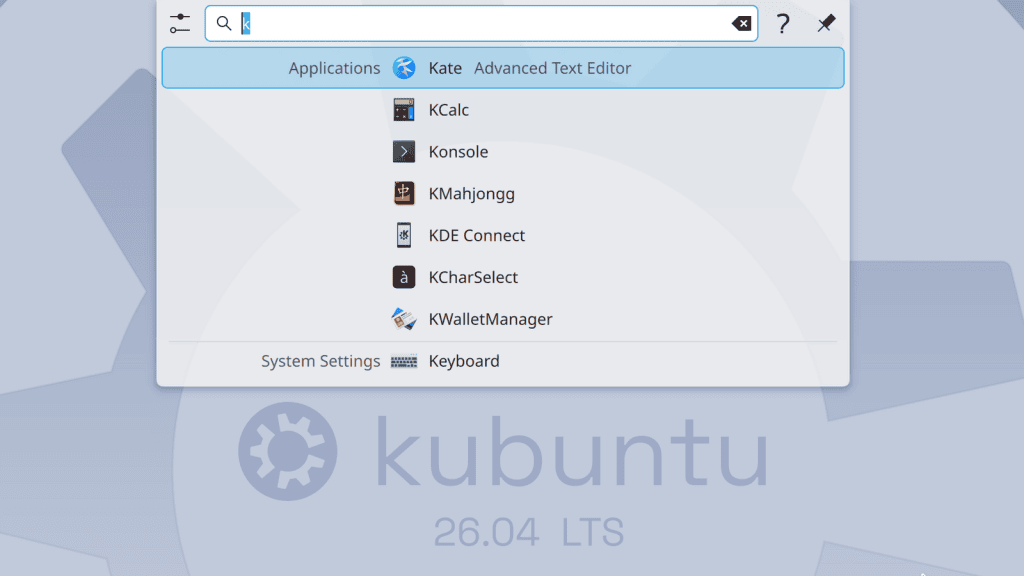
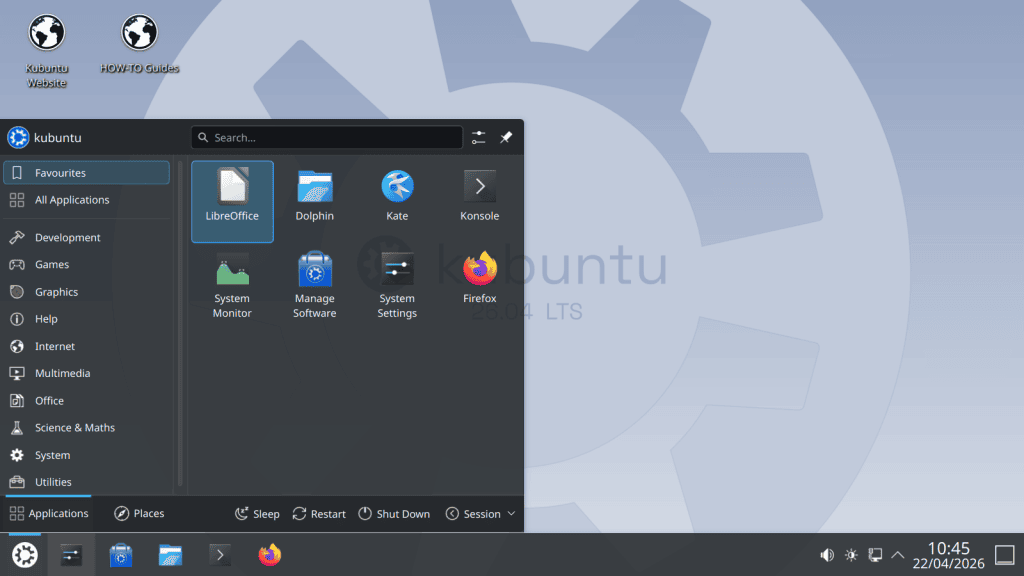
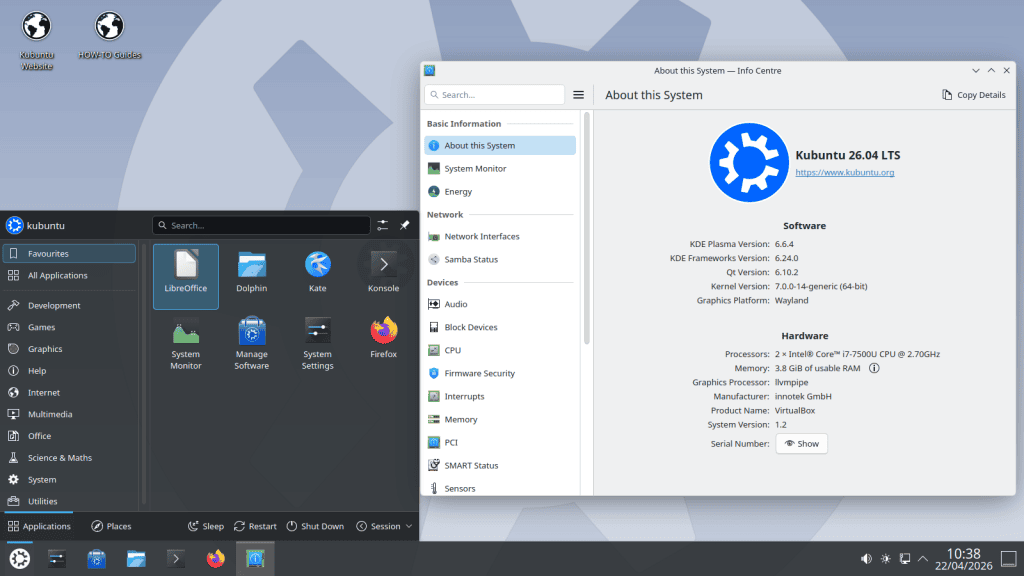
OS Screenshots