

Electric vehicle (EV) lithium-ion batterie
Lithium-ion (Li-ion) batteries are the undisputed workhorses of the electric vehicle (EV) revolution. As the automotive industry accelerates its transition away from fossil fuels, battery technology is evolving at a breakneck pace to deliver longer ranges, faster charging times, and lower costs.
The global lithium-ion battery market is expanding rapidly, projected to surge from $134.08 billion in 2025 to $206.98 billion in 2026, with the automotive segment accounting for a massive 42.52% of the market share.
Here is an in-depth look at the architecture, current market trends, and future innovations shaping EV lithium-ion batteries.
Anatomy of an EV Battery
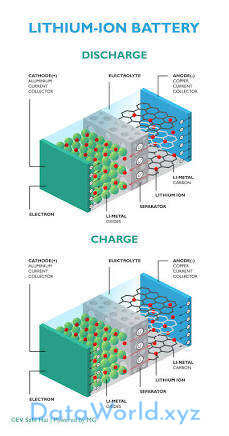
At a fundamental level, an EV battery pack is made up of thousands of individual cells grouped into modules. Each cell operates on a reversible chemical reaction:
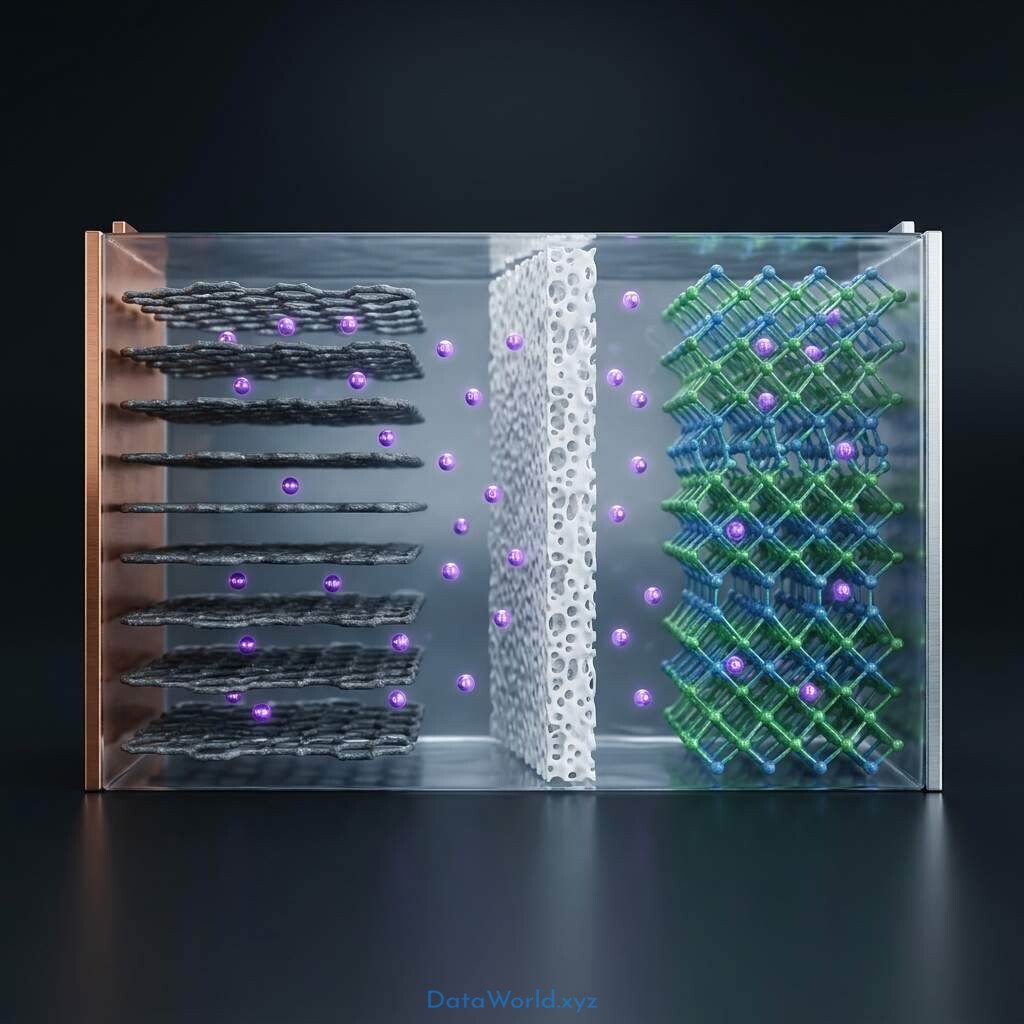
Cathode (Positive Electrode): Typically made of metal oxides, this dictates the battery’s capacity and voltage.
Anode (Negative Electrode): Usually made of graphite, storing lithium ions when the battery is charged.
Electrolyte: A liquid or gel solvent that allows lithium ions to flow back and forth between the anode and cathode.
Separator: A micro-permeable membrane that prevents the anode and cathode from touching (which would cause a short circuit) while letting ions pass through.
Explore the microscopic architecture and chemical processes of these cells in detail below:
Dominant Trends in 2025–2026
The EV battery landscape is currently undergoing a massive shift in chemical composition and system architecture to prioritize safety and affordability.
1. The Rise of LFP (Lithium Iron Phosphate)
Historically, automakers relied on Nickel Manganese Cobalt (NMC) chemistries to maximize range. However, Lithium Iron Phosphate (LFP) has rapidly taken over. In 2025, the deployment of LFP batteries surpassed nickel-based chemistries for the first time. By 2026, LFP batteries are projected to command 52.13% of the global lithium-ion market. They are favored for their lower cost, lack of controversial cobalt, superior cycle life, and high thermal stability.
2. Drastic Cost Reductions
Scaling up production and refining material science has led to significant price drops. Analysts project that EV battery prices will drop by nearly 50% in 2026 compared to their 2023 levels. This cost reduction is the primary catalyst driving EVs toward price parity with internal combustion engine (ICE) vehicles.
3. 800-Volt Architectures
To solve “range anxiety,” automakers are migrating from traditional 400-volt systems to 800-volt battery architectures. Higher voltage allows for decreased vehicle weight, increased thermal efficiency, and Extreme Fast Charging (XFC)—enabling drivers to add hundreds of miles of range in just 15 to 20 minutes.
The Next Frontier: Solid-State Batteries
While liquid-based lithium-ion batteries continue to improve, the industry’s ultimate goal is the commercialization of solid-state batteries.
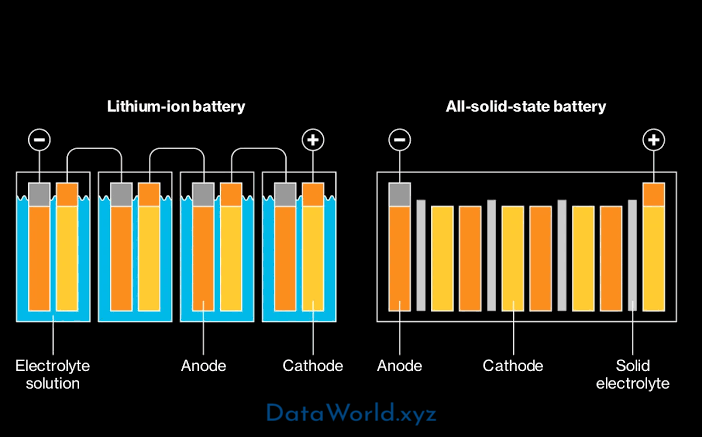
Solid-state technology replaces the flammable liquid electrolyte with a solid ceramic, glass, or polymer material. This structural change eliminates the need for traditional separators and paves the way for lithium-metal anodes, which have a theoretical energy density nearly ten times higher than standard graphite anodes.
The years 2025 and 2026 mark a critical turning point for this technology, moving it out of the laboratory and into early pilot production:
The global EV solid-state battery market is forecast to jump from $24.8 million in 2025 to $78.6 million in 2026.
The sector is projected to experience a staggering Compound Annual Growth Rate (CAGR) of 61.2% through 2034.
Leading automakers are aiming to introduce vehicles equipped with these advanced batteries between 2026 and 2028, promising EVs that are lighter, substantially safer from thermal runaway, and capable of much longer driving ranges.
Sustainability and Second-Life Use
As the first major wave of modern EVs begins to reach end-of-life, sustainability has become paramount. Machine learning-driven battery management systems (BMS) are now being deployed to optimize battery health over time and communicate charging status directly to fleet operators.
Furthermore, a battery that can no longer provide the aggressive power delivery required for an EV often still retains 70% to 80% of its original capacity. These “retired” batteries are increasingly being repurposed for second-life applications, such as stationary grid storage for solar and wind farms, before eventually being fully recycled to reclaim raw materials like lithium, nickel, and copper.