
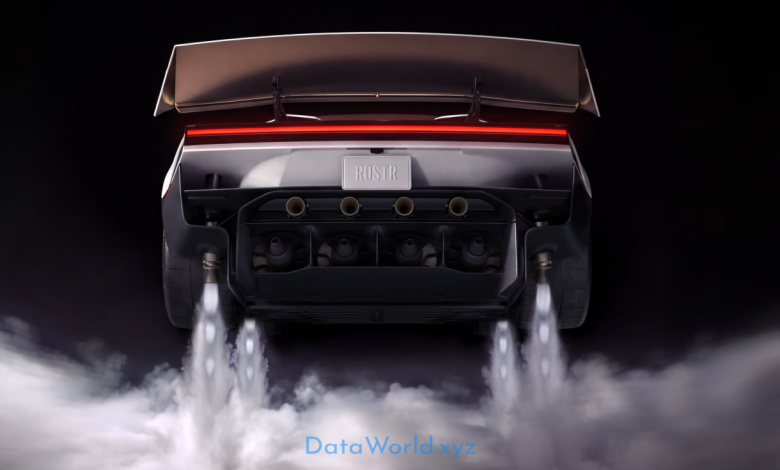
Breaking the Laws of Physics: The Technical Overview of the Tesla Roadster
A Technical Overview of the Next-Generation Tesla Roadster
The next-generation Tesla Roadster redefines the boundaries of electric hypercars. Blending aerospace engineering with advanced automotive technology, the vehicle incorporates ground-effect vacuum fans, active aerodynamics powered by humanoid robotics actuators, and optional cold-gas thrusters developed in collaboration with SpaceX.
- Powertrain & Performance Engineering
Unlike traditional high-performance electric vehicles that utilize all-wheel-drive configurations, the next-generation Roadster adopts a rear-wheel-drive dual-motor layout operating on an 800V–1000V architecture. Power delivery is managed via an 8.4:1 reduction planetary gear set paired with dual high-frequency inverters, delivering millisecond-level torque vectoring across the rear axle.
- Total System Power: ~1 Megawatt (1,341 hp)
- Max Rear Axle Torque: > 1,032 lb-ft
- Vehicle Curb Weight: < 1,700 kg (3,747 lbs)
- Architecture: 800V–1000V High-Voltage System
- Dynamic Performance by Trim Level
The Roadster is available in four specialized configurations, ranging from street-focused performance to experimental low-gravity propulsion setups.
| Trim Level | Seating | Key Propulsion Tech | 0–60 mph Acceleration | Top Speed |
| Standard | 2 Seats | 1 MW Rear-Drive Powertrain | ~2.0s (Est.) | 214 – 230+ mph |
| Performance | 2 Seats | Ground-Effect Fan Suction + Active Aero | < 1.6 s | > 230 mph |
| Thrust | 2 Seats | Rear Cold-Gas Thrusters + Suction Fans | < 0.85 s | > 230 mph |
| Rocket | 1 Seat | 360° Cold-Gas Thrusters + Air Thrusters | < 0.59 s | 330 mph (Target) |
Breaking the Laws — Key Insights & Complete Guide
If you are looking for accurate and comprehensive information about Breaking the Laws, this detailed guide walks you through every essential aspect. Below, we explore the core strategies and practical insights regarding Breaking the Laws. By following these proven best practices and step-by-step recommendations, you can achieve optimal results quickly and effectively.
| Note: The Rocket edition features thrusters positioned around the perimeter of the vehicle, generating 80–90 kN of thrust capable of short hover maneuvers, lateral rotation, and zero-speed directional control. |
- Battery System & Thermal Architecture
To achieve sustained track performance without thermal throttling, Tesla developed custom 4680-format battery cells encased in lightweight aluminum rather than standard steel cans.
- Pack Capacity: ≈ 150 kWh
- Cell Type: High-discharge Aluminum-cased 4680 cells
- Thermal Management: Single-pass double-sided cooling jacket
- Charging Standard: Megawatt-level DC fast charging (15% to 85% in ~10 minutes)
- Estimated Range: 300+ miles
- Advanced Aerodynamics & Chassis Integration
Downforce is generated independently of vehicle velocity through a multi-mode suction fan system combined with active ground skirts.
- Zero-Speed Downforce: Bottom vacuum fans create downforce even while stationary, locking the vehicle to the tarmac.
- Robotic Actuators: The dynamic rear wing operates via heavy-duty leg actuators borrowed directly from the Tesla Optimus humanoid robotics program, withstanding up to 2Gs of downforce at speeds over 200 mph (320 km/h).
- Structural Composites: Monocoque and chassis reinforced with carbon fiber, titanium, and magnesium to minimize overall mass.
- Control Systems: Full Steer-by-Wire, Brake-by-Wire, and Throttle-by-Wire.
- Aerospace-Inspired Cockpit & Exterior
- Exterior Elements: Pop-down hidden headlights, full-width rear light bar, flush carbon bodywork, and ‘Ano White’ UV/cryogenic protective paint formulations.
- Cockpit Design: Minimalist ‘Supersonic’ interior featuring white leather, gray microsuede bolsters, and chassis-molded fixed seating with adjustable pedal boxes.
- Displays: Tri-screen setup—center primary display, dual forward instrument displays, and a windshield-adjacent HUD telemetry strip.